
Use the BAH calculator below to see your 2026 BAH rate. Enter your pay grade, duty station ZIP code, and whether you have dependents to get your monthly housing allowance rate for your military housing area.
BAH Calculator
What Is Basic Allowance for Housing?
Basic Allowance for Housing (BAH) is a tax-free monthly allowance that helps active-duty service members cover rent and utilities when they live off base.
Your rate depends on your pay grade, your duty station’s ZIP code, and whether you have dependents. It’s designed to cover about 95% of average local housing costs.
BAH rates are updated annually based on local housing costs. If rents and utility costs change in a market, rates follow on January 1 of the next year.
If your pay grade or dependency status changes, your BAH updates right away, and your payment reflects your new status the following month. Because BAH is tax-free, it isn’t subject to federal or state income tax or FICA, so it’s worth more than the same amount of taxable pay.
2026 BAH Rates: What Changed
For 2026, the Department of War raised BAH by 4.2%, effective January 1, 2026.
The 4.2% average increase is lower than the annual increases from 2022 through 2025. With a 5.1% increase in 2022, 12.1% in 2023, 5.4% in 2024, and 5.4% in 2025. It’s higher than every yearly change from 2015 through 2021, which ranged from 0.5% in 2015 to 3.4% in 2016.
From 2014 to 2026, the BAH rate’s average yearly increase is about 4.0%. Though local changes vary widely. Some military housing areas rose more than the average, some rose less, and a few fell.
New rates take effect each January 1 and appear in your first paycheck of the year. Your rate updates automatically, so you don’t need to apply to receive your benefit. To see your exact 2026 rate, use the BAH calculator above.
BAH Rates at Major Installations
BAH rates vary widely by location, so the same pay grade can mean very different housing allowances at different duty stations.
This table compares 2026 monthly rates for an E-5 (with and without dependents) and an O-3 (with dependents) across eight popular locations, which can help you when weighing a PCS move or duty station choice. For example, an E-5 with dependents receives $3,975 in San Diego and $1,806 in Fort Bragg/Pope, NC. For your own BAH rate, use the calculator above.
| Location | ZIP | E-5 Without Dependents | E-5 With Dependents | O-3 With Dependents |
|---|---|---|---|---|
| Honolulu, HI (HI408) | 96860 | $2,856 | $3,663 | $4,428 |
| Tacoma/JBLM, WA (WA311) | 98433 | $2,121 | $2,556 | $3,123 |
| San Diego, CA (CA038) | 92101 | $3,147 | $3,975 | $4,518 |
| Fort Campbell, KY (KY106) | 42223 | $1,593 | $1,815 | $2,496 |
| Norfolk/Portsmouth, VA (VA298) | 23511 | $1,908 | $2,430 | $2,694 |
| San Antonio, TX (TX285) | 78234 | $1,500 | $1,869 | $2,127 |
| Fort Bragg/Pope, NC (NC182) | 28310 | $1,527 | $1,806 | $2,175 |
How Is BAH Calculated?
There are three key factors that go into how much BAH you will receive:
- Pay grade: Higher pay grades receive higher rates. Enlisted, warrant officer, and officer grades each have their own rate for every military housing area.
- Duty station: Your rate follows the ZIP code of your assigned duty station, not where you choose to live. If you’re stationed at Fort Hood but rent in a nearby town, your BAH still uses the Fort Hood area. The Department of War sets a rate for each military housing area using local rent and utility data.
- Dependents: Having any dependent, such as a spouse or child, qualifies you for the higher with-dependents rate, and additional dependents don’t raise it further. If two active-duty members are married to each other, each receives the without-dependents rate. If they have children, one parent receives the with-dependents rate.
BAH rates are based on the average cost of renting a home, not the average cost of homeownership. In some markets, a BAH allowance is more than enough to cover monthly rent but may not cover a mortgage payment, at least not without a larger down payment.
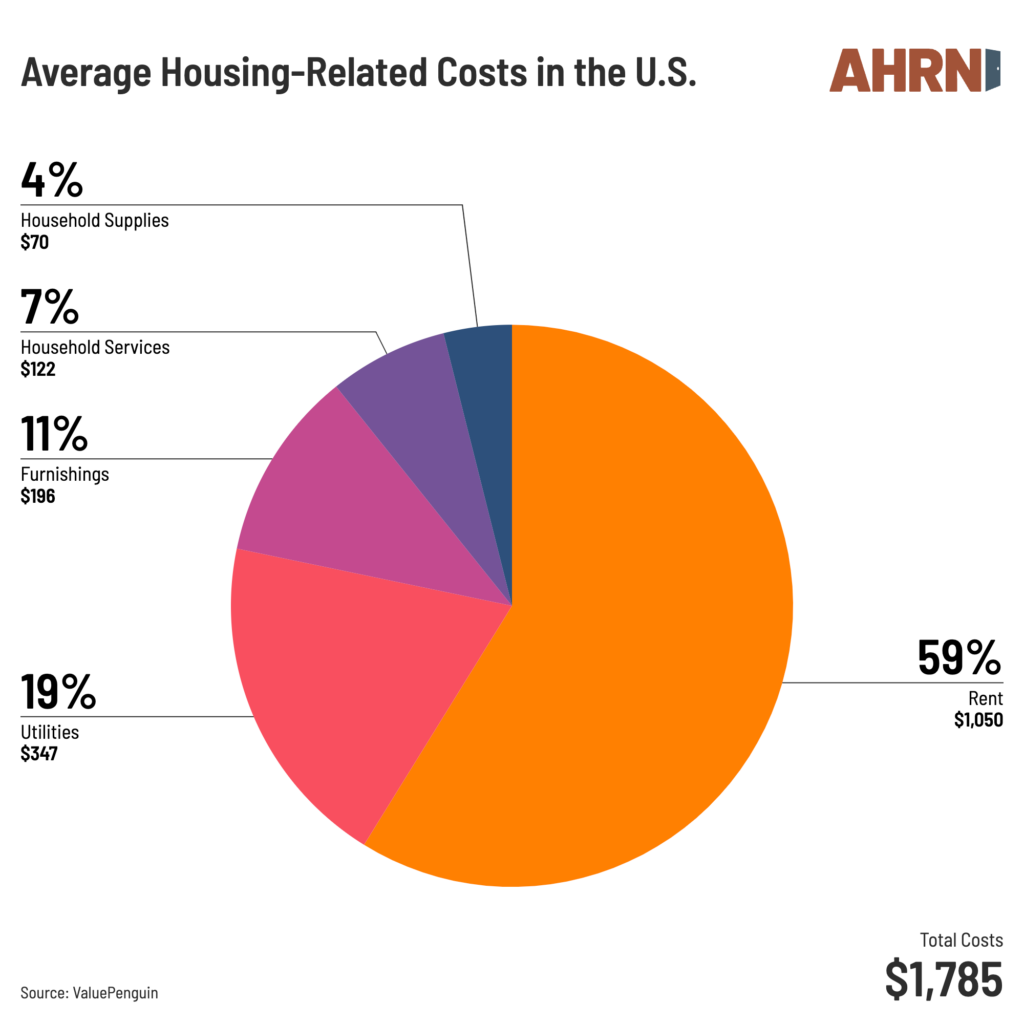
This can be an issue in some more speculative housing markets, such as Hawaii and San Diego. However, in other areas, BAH allowances may allow you to live comfortably and potentially enable you to turn your home into a rental property when you PCS to your next duty station or leave the service.
BAH is your benefit to spend however you like. You can buy a home with a VA loan and keep collecting full BAH, or share a rental with other active-duty roommates who each receive their own full rate, as long as you’re authorized to live off base.
Can My BAH Go Down?
The published rate for a ZIP code can fall, but your own rate is usually protected. Under individual rate protection, once you qualify for BAH at a duty station, your rate doesn’t drop while you stay there with the same status, even if local rates decline.
For example, you PCS to Hawaii and qualify for $1,500 a month. The next year, the published rate for your ZIP code falls to $1,400. The lower rate applies to service members arriving after you, not to you. Increases still take effect automatically each January 1.
Your rate can still drop if you PCS to a lower-cost area, lose dependents, or are demoted.
Planning a Move? Our PCS Toolkit Covers Timelines and Checklists.
Types of BAH At a Glance
BAH comes in several different types: BAH Type 1, BAH Type 2, Dual Military, Partial BAH, and BAH Differential. Here is a closer look at each of them:
| Type | Who Receives It | How the Rate Is Set |
|---|---|---|
| BAH Type 1 | Active-duty members living off base | Pay grade, duty station, and dependency status |
| BAH Type 2 (RC/T) | Reserve and Guard members activated for 30 days or fewer | Pay grade and dependency status only. Location doesn’t matter, so it’s often much lower than Type 1 |
| Dual military BAH | Two married active-duty members | Each receives the without-dependents rate; one parent receives the with-dependents rate if they have children |
| Partial BAH | Members without dependents who live in government quarters, such as barracks | A small fraction of the standard rate |
| BAH Differential | Members in government quarters who pay child support | The difference between with- and without-dependents rates, paid only when child support meets or exceeds that difference |
Reserve and Guard members who have been activated for more than 30 days receive standard BAH. Members stationed in non-locality areas should see the 2026 non-locality BAH rates.
BAH for Veterans and Service Members Overseas
Veterans using the GI Bill and service members stationed overseas don’t receive BAH, but they get similar housing allowances with their own rules.
Using the BAH Calculator for Your GI Bill Housing Allowance
Veterans, service members, and eligible spouses and children using the Post-9/11 GI Bill receive a Monthly Housing Allowance (MHA) while enrolled. It works like BAH, with a few differences:
- It’s based on where most of your classes are held, not where you’re stationed.
- The rate equals the BAH for an E-5 with dependents, regardless of your rank or family status.
- You must be enrolled more than half-time to receive it.
To estimate your MHA, use the calculator above: select E-5 as your pay grade, enter your school’s ZIP code, and choose “Yes” for dependents.
See our GI Bill guide to check your eligibility.
BAH for Service Members Overseas
Active-duty members stationed outside the 50 states, including Guam, American Samoa, and the U.S. Virgin Islands, receive Overseas Housing Allowance (OHA) instead of BAH. Although Alaska and Hawaii are considered OCONUS moves, they still receive BAH, not OHA.
Check Your BAH Rate With the Calculator
Your BAH can change whenever your situation changes, such as after a promotion, the addition of a new dependent, a PCS, or a new year of rates.
Each time, run your numbers through the BAH calculator above to see your current monthly rate before you sign a lease, make an offer on a home, or set your budget. It works for every pay grade and ZIP code, so you can also check a possible duty station before you PCS.

Written by Rick West
Rick West is the President of AHRN and a highly respected U.S. Navy Veteran with more than 32 years of distinguished service. As the 12th Master Chief Petty Officer of the Navy (MCPON), he served as the senior enlisted advisor to the Chief of Naval Operations and the Chief of Naval Personnel, representing Sailors and their families around the world. Since retiring in 2013, Rick has continued his lifelong commitment to service by leading AHRN in its mission to support military members, Veterans, and their families with trusted housing resources and relocation support.

Reviewed by Jason Van Steenwyk
Jason Van Steenwyk is a U.S. Army veteran and longtime writer covering military life, housing, mortgages, real estate, and personal finance. He's an Iraq war veteran and former infantry soldier and now writes to help fellow service members, veterans, and their families make smart financial and housing decisions. Over the past two decades, his work has appeared in dozens of publications dedicated to supporting military families and veterans.