
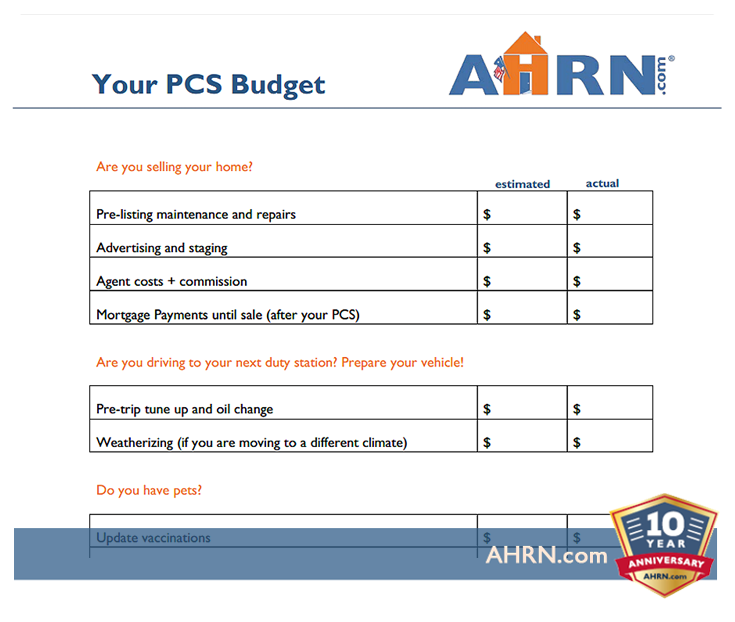
Click on the image to download your PCS budget!
Get a head start on making your permanent change of station (PCS) move as seamless and stress-free as possible with a solid PCS budget. Planning ahead for move-related expenses will help you keep track of costs that the military may reimburse you for.
In addition, a budget will help you ensure that the expenses you are in charge of do not exceed your financial capabilities. Review the top costs military members find themselves responsible for and use this information to complete your PCS Budget.
Deciding to Sell or Rent Your Home?
Whether you choose to sell your home or become a military landlord and rent it out, both options come with a cost. Therefore, you will need to build room in your budget for preparing your property for rent or sale.
Updating appliances and performing minor maintenance projects to fix the quirks in your home that you have been willing to live with are just a couple of steps you’ll need to take. Even the most pristine homes often require some level of minor repairs and changes to prepare them to be listed.
To help you offset the cost of listing a home for sale or rent, consider advertising your home on AHRN. Here, your property will be marketed to a wide audience of military members and families seeking military housing close to their following PCS location.
Consult a Military Relocation Professional (MRP)
Military relocation professionals (MRPs) are experts in helping military members discover military housing, whether you are renting or selling. In addition, they are licensed real estate agents that can assist you with selling your current home.
Since MRPs are educated on military PCS processes, they are an excellent and understanding resource to lean on while you are preparing to move. Depending on your state’s norms, the services of a real estate agent will come at a cost to either the buyers or the seller. Normally, landlords pay real estate agent commissions for bringing them a reliable renter.
More Like This: Many military spouses find becoming a Military Relocation Specialist an easy process! This is because they are already familiar with what military members and families go through during a PCS. Learn more about Becoming an AHRN Military Relocation Professional!
Prepare your Vehicles
Military moves can take you across town or across the world. In cases of moves that take you outside of the continental United States (OCONUS), you may want to look into PCS car shipping military benefits. If your PCS requires a road trip across the country, you may be eligible to receive compensation from the military for each mile you drive to your new installation.
On top of these expenses that may be reimbursed by the military, you’ll want to plan ahead and budget for vehicle preparedness. For an extended road trip, you’ll want to take your car in for a tune-up and oil change.
Moreover, if you are moving somewhere with a substantially different climate, you can determine if winterizing your vehicle deserves a space in the PCS budget and to-do list. For example, moving from Texas to Montana in the winter could take a toll on your car if it isn’t properly treated.
PCS with Pets
Our four-legged family members have a PCS checklist of their own! All pets should be up to date on their shots before you PCS, especially if you are heading overseas to your new installation. We recommend checking in with your current installation’s vet office, as many offer vaccinations at low cost.
In some states and in cases of pets being shipped overseas, animals need to have a health certificate from a vet certifying that they show no sign of a contagious illness. For instance, PCSing to Germany with pets requires your furry friends to have their own passport, proof of vaccinations and a veterinary health certificate.
Every pet should also be microchipped before a long-distance move, which can easily be done at a reasonable cost when vaccinations are updated.
Move-Out Prep
The little expenses that incur during a move can really add up. Extra cleaning supplies, eating out once the kitchen is clean and unexpected repairs can all chip away at the PCS budget. Do a thorough walk-through and make a note of all needed repairs and any additional supplies you may need to clean the home. Use this list to create an estimate of your move-out expenses and adjust as you go.
Hot Tip: Looking to save some money during your military PCS move? Check out how a Partial DITY Move could be more cost-effective!
Hidden Travel Costs
One of the most expensive parts of a PCS is the time you spend in transit. Many of the costs associated with traveling are covered by the relocation allowances you will request in your Finance Brief. It is important to note, though, that you will be expected to pay out of pocket and then submit paperwork to be reimbursed.
You may need a hotel throughout your journey, either during your trip or at the end before you move into your new military housing location. If your hotel does not accept pets, you will need to build in the cost of boarding your pets. Eating out can also quickly swallow a budget. While some of these things may be reimbursed later, you’ll want to ensure they are worked into your budget in case you are responsible for them in the end.
Don’t forget to give yourself a little room for activities and entertainment for both kids and adults during this transition time. Although it may seem like moving is your job at the present time, you’ll want to include activities to help your family decompress.
Restocking Upon Arrival
Once you get settled into your new home, it’ll be time to stock back up on the items you had to dispose of at your last installation. The pantry, fridge and household items like toiletries and cleaning supplies can take a huge chunk out of your budget. Planning ahead for that expense can prevent the first few weeks at your new duty station from being more stressful than they need to be.
Create Your Organized Moving Plan
Here at AHRN, we are committed to helping military members and families make PCSing as easy as possible. To get started with your own military move, download this free PCS Budget Worksheet, and begin tracking your moving expenses.
Want to know more about the military PCS process? We’ve got you covered. From information about important military acronyms to know to a printable PCS move checklist, we walk you through the entire PCS process from beginning to end.
Download AHRN's PCS Toolkit

Written by AHRN Team
A part of the military's trusted source for off-base housing, our editorial team is here to share tips and tricks to moving, PCS, home loans, and renting for military families.